
Have you ever wondered why two condominiums located in the exact same neighborhood can have a price gap of RM200,000? One sells for RM500,000, while the other commands RM700,000.
Why is it that some buyers invest in massive township developments, only to find the area still quiet and “un-popped” even after 10 years? Conversely, why do others buy standalone “pocket” condos, only to watch their secondary market value stagnate?
If you want to avoid paying an expensive “tuition fee” on one of the biggest purchases of your life, you are in the right place. Today, we are pulling back the curtain on developer strategies, diving deep into the legal frameworks in Malaysia, and sharing real-world combat experience to help you identify which property type is the ultimate “growth horse” for your lifestyle and portfolio.
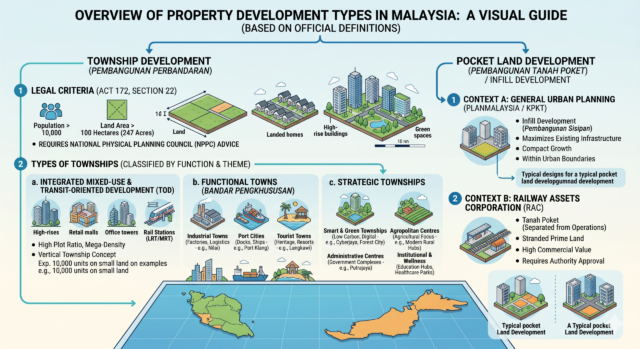
Part 1: What Actually Counts as a “Township” in Malaysia? (The Legal & Regulatory Truth)
In Malaysia, a developer cannot just build a few rows of houses and call it a “Township.” The legal and regulatory barriers to entry are incredibly high, governed by a hierarchical planning system designed to balance federal oversight with state-level execution.
The Statutory Trigger: Section 22(2A)(a) of Act 172
According to Section 22(2A)(a) of the Town and Country Planning Act 1976 (Act 172), a development is classified as a “New Township” if it meets strict quantitative thresholds:
- Massive Scale: A total land area exceeding 100 hectares (approximately 247 acres).
- Significant Population: A projected residential population of over 10,000 people.
When a project crosses this threshold, it is classified as a development of national significance. Under the law, the Local Planning Authority (LPA) must seek advice from the federal National Physical Planning Council (NPPC) to ensure the master plan aligns with the National Physical Plan (NPP).
Skipping this federal consultation can be fatal for developers. In landmark judicial disputes—such as the famous Sunrise Garden Condominium v. Sunway City case—planning permissions granted by local authorities have been ruled invalid because developers failed to secure the required NPPC advice for high-impact developments (particularly under Section 22(2A)(c) regarding hilltops and sensitive slopes).
Why Townships Take Years to Approve: Category A Social Impact Assessments (SIA)
Under the Town and Country Planning (Amendment) Act 2017 (Act A1522), social considerations now hold parity with physical and economic planning.
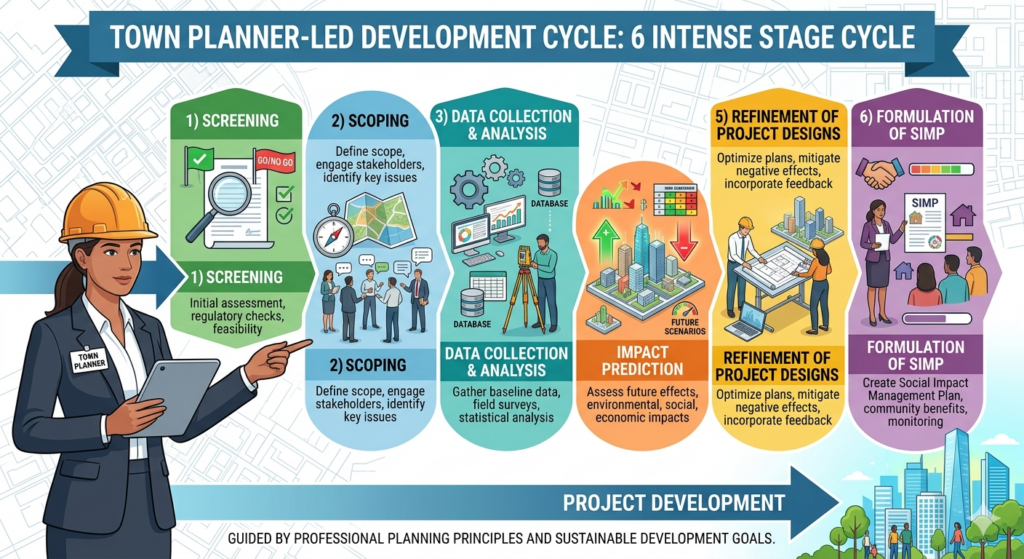
All new townships fall under “Category A” Social Impact Assessments (SIA) managed by PLANMalaysia Federal. Before a single brick is laid, a registered town planner must lead the development through an intense 6-stage cycle:
- Screening
- Scoping
- Data Collection and Analysis
- Impact Prediction
- Refinement of Project Designs
- Formulation of a Social Impact Management Plan (SIMP)
This is why master planning a township is an incredibly high-stakes, multi-year game. Developers aren’t just constructing residential buildings; they are legally obligated to build extensive arterial road networks, advanced centralized sewerage systems, and reserve public land for schools, hospitals, fire stations, and police stations. When you buy into a township, you are buying a federally scrutinized, self-sustaining ecosystem.
Beyond Residential: The Functional Taxonomy of Specialized Townships (DPN2 Framework)
Under the Second National Urbanisation Policy (DPN2 / NUP2), Malaysia has transitioned from a “place-centered” planning model to a “people-centered” one. The policy strategically categorizes townships based on their functional economic roles:
- Industrial Towns: Designed to maximize manufacturing clusters, logistics hubs, and supply chain integrations.
- Port Towns: Centered on maritime logistics and global trade corridors (predominantly in our Northern and Southern Conurbations).
- Tourist Towns: Purpose-built to leverage regional heritage and natural assets to drive the services sector.
- Strategic Townships (Smart and Green Cities): Flagship premier developments like Putrajaya and Cyberjaya that pilot the Malaysia Smart City Framework (MSCF) and the Low Carbon Cities Framework (LCCF), aiming to reduce carbon emissions by 45% by 2030 through integrated green building designs, smart energy management, and communal urban agriculture.
- Agropolitan Centers: Unique urban-rural integrated hubs designed specifically to introduce urban-grade social services into agricultural heartlands to prevent rural depopulation.
The Gold Standard: Desa ParkCity
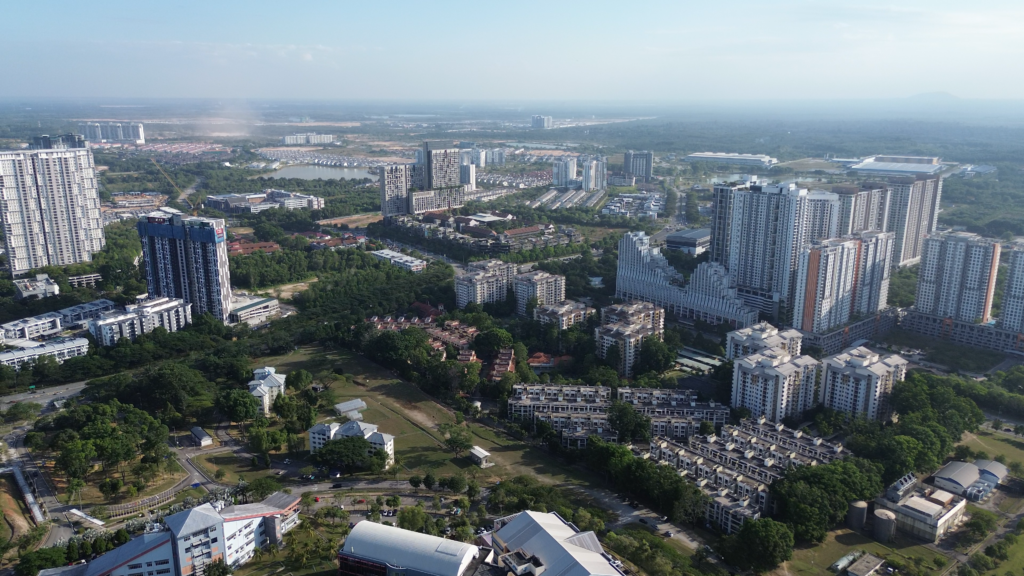
Think of Desa ParkCity (DPC). It is the textbook definition of a highly successful “integrated township.” Residents rarely need to leave the boundary to satisfy their daily needs. With schools, medical centers, commercial hubs like Plaza Arkadia, shopping spots like The Waterfront (anchored by Village Grocer), and beautiful central parks, DPC has created a massive premium on its properties.
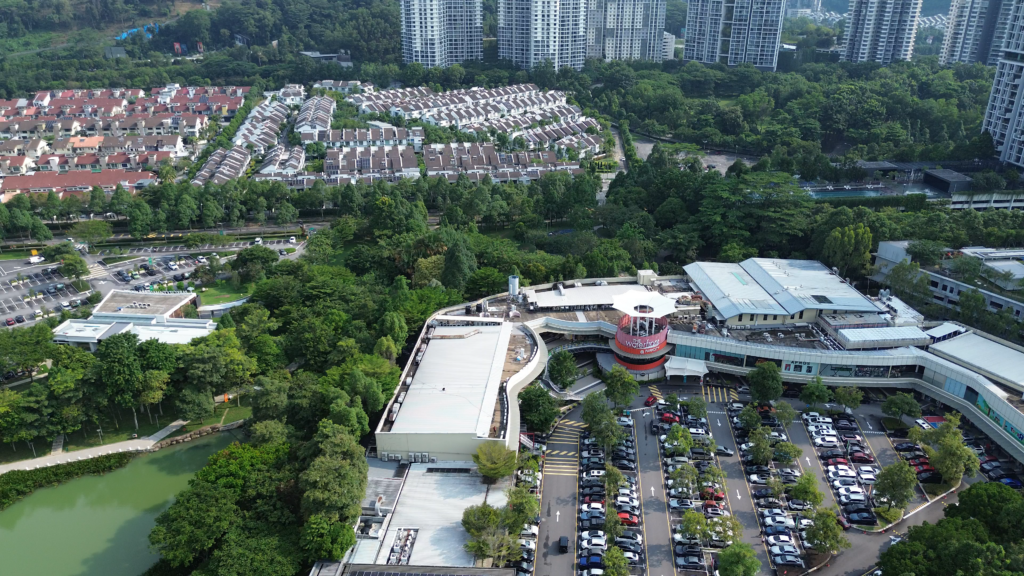
What makes DPC stand out? It’s designed entirely around human-centric living—generous pedestrian walkways, lush greenery, and cohesive master planning. Most importantly, it is entirely developed by a single master developer. This ensures seamless execution, phase by phase, without fragmented or clashing layouts.
Part 2: Pocket Land (Infill Development) – “What You See Is What You Get”
If a property isn’t a massive township, it usually falls under Pocket Land Development, professionally known as Infill Development. Under the Kuala Lumpur Local Plan 2040 (KLLP2040), infill development is highly prioritized to achieve more economical, sustainable land use in saturated urban spaces by redeveloping brownfield sites or unused urban “gaps.”
Because these are smaller-scale projects, they fall under SIA Category B (State/Local Authority), meaning the regulatory hurdles are lower and the approval timelines are significantly faster.
Some buyers worry that pocket land developments are less “worth it” compared to sprawling townships. But in the world of real estate, price and risk share an inverse relationship.
The Case Study: Majestic Maxim, Cheras Connaught
Take Majestic Maxim as an example. If you know the Cheras Connaught area, you’ll know this 6-plus acre site was once just a local food court. Today, it has been transformed into a high-density serviced apartment complex featuring 4 blocks and roughly 2,000 units.
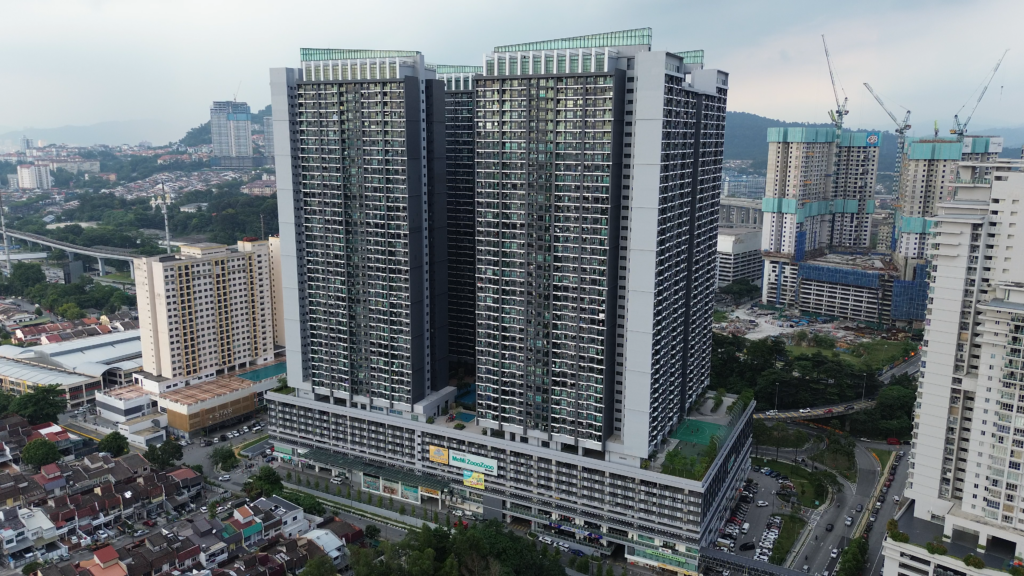
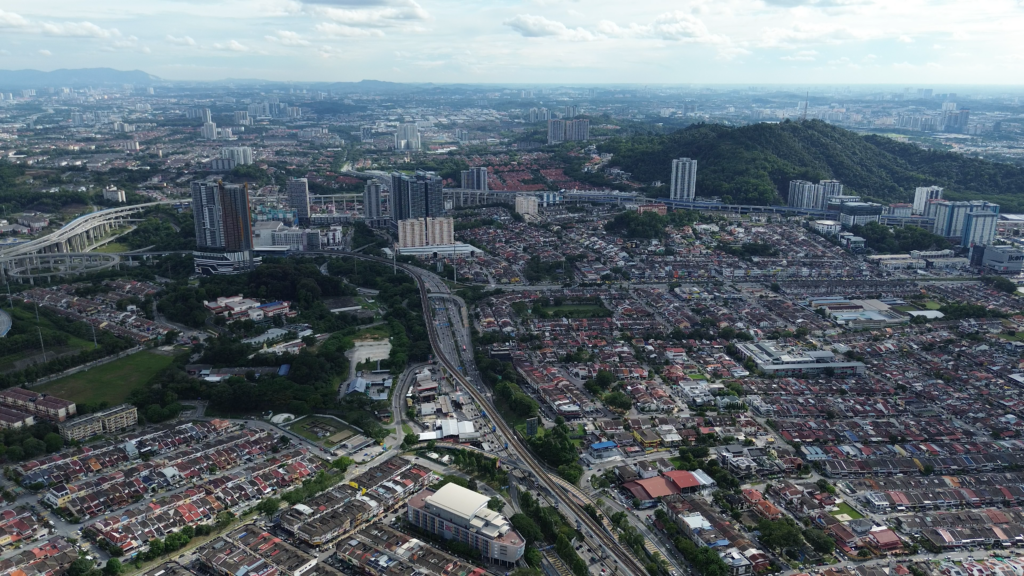
While it looks incredibly dense, its superpower is its location inside Taman Connaught—a neighborhood with over a 30-year history.
- You don’t have to wait for the developer to build a school, a supermarket, or restaurants.
- Everything is already a living reality (“What you see is what you get”).
The Risk Factor: Future Certainty vs. Unfulfilled Promises
The risk of a Township lies in its future. If you buy into a township and the developer fails to deliver key promised elements (like a commercial mall or public park), you are stuck in an incomplete ecosystem. Therefore, when buying a township, choosing the right developer is absolutely critical, because they hold the key to your future lifestyle.
On the flip side, Infill Developments offer immediate certainty, meaning their risk is incredibly low. Because you are buying into established convenience, infill projects usually command a “Certainty Premium” (补地性溢价), meaning they are often priced slightly higher than older surrounding properties—and rightfully so.
Part 3: Vincent’s High-Value Infill Recommendations for Own-Stay
If you are looking to plant roots in a highly mature area with lower risks and excellent value, here are two projects I highly recommend:
- The Queenswoodz by Exsim (Near Pavilion Bukit Jalil)
- Designed with spacious family-sized layouts.
- Perfect for growing families wanting premium suburban living next to world-class retail.
- The Maxxon (Cheras Damai Perdana)
- Freehold, pure residential title.
- Priced at an incredibly competitive rate of just RM500+ per square foot.
- You can secure a 1,000 sqft, 3-bedroom, 2-bathroom home in a highly mature area at an accessible price. This is an absolute steal and an incredibly safe entry ticket for young couples starting a family.
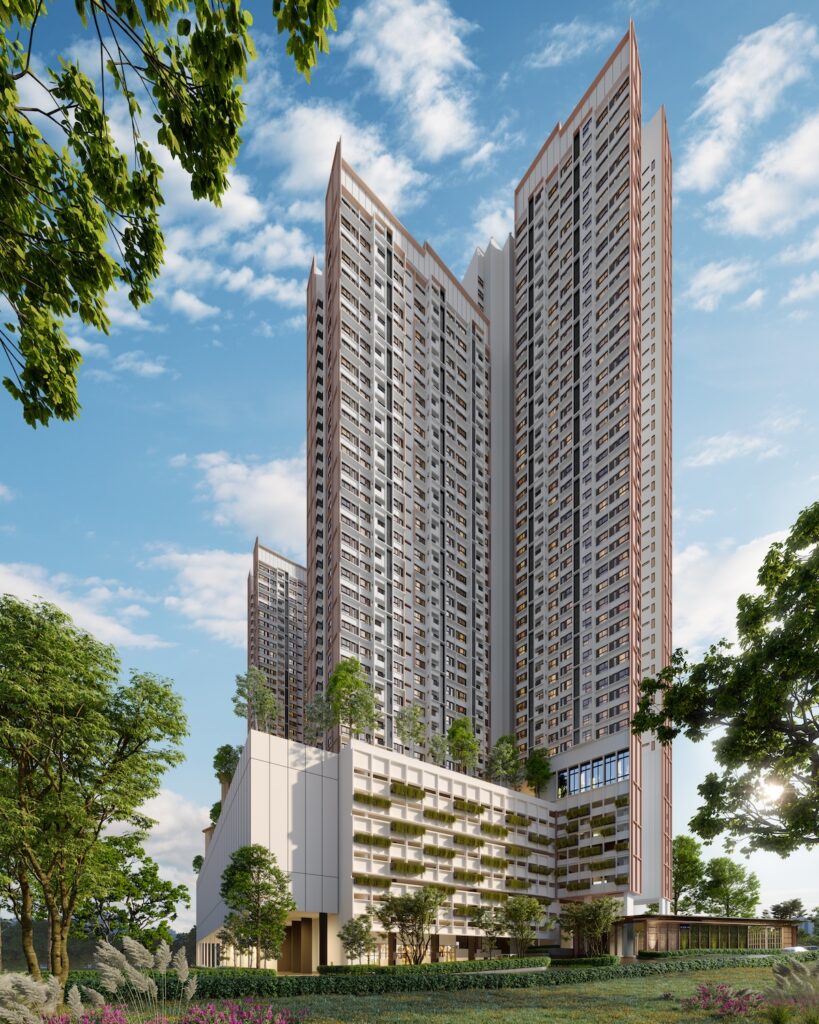
Interested in The Queenswoodz? Get in touch with me directly via WhatsApp!
Chat with Vincent on WhatsApp
Interested in The Maxxon? Get in touch with me directly via WhatsApp!
Chat with Vincent on WhatsAppPart 4: The Transit-Oriented Development (TOD) Debate – Is Density Actually a Bad Thing?
When I discuss TODs (Transit-Oriented Developments) with clients, many immediately push back: “But Vincent, it’s so crowded and high-density!”
Here is my counter-intuitive truth: Density is exactly what makes a TOD successful.
The Mechanics of the “Vertical Township”
Under the National TOD Guidelines (Garis Panduan Perancangan Pembangunan Berorientasikan Transit) published by PLANMalaysia, development intensity in urban transit cores is radically redefined. Instead of traditional unit-per-acre density limits, TODs use Plot Ratio or Floor Area Ratio (FAR) as their primary control mechanism, defined mathematically as:
In high-intensity City Centre Commercial (CCC) zones under the KLLP2040, developers are permitted plot ratios of 1:8 to 1:10, compared to standard Neighbourhood Centre Commercial (NCC) zones which are capped at 1:3.
This mathematical multiplier allows developers to stack residential, office, retail, and public spaces vertically. It concentrates the economic activity, community amenities, and population of a traditional 200-acre horizontal township into a highly efficient 3 to 15-acre high-rise precinct centered within a 400 to 800-meter (10-minute) walk of a transit station.
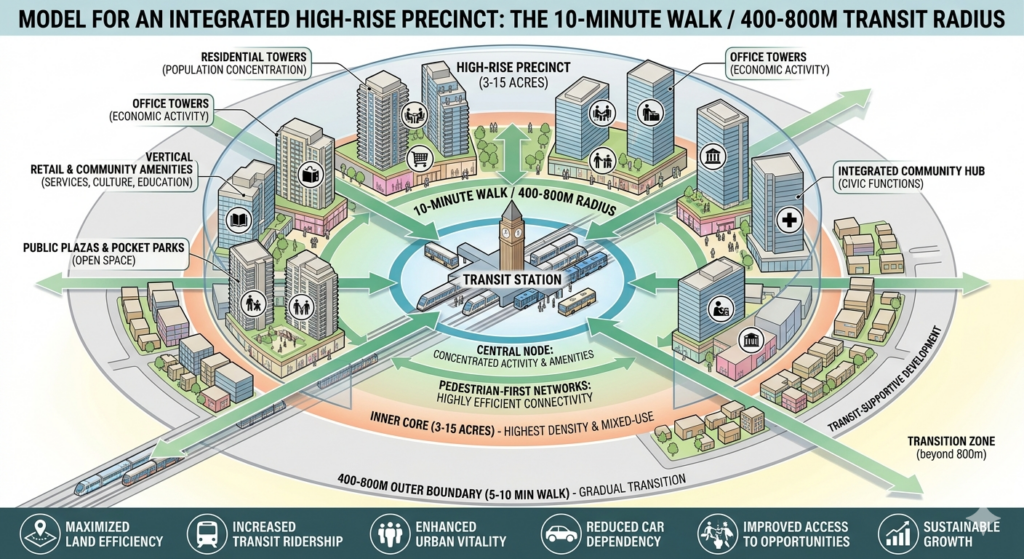
If you don’t build upwards, how can you gather enough people within walking distance to support those retail and transit networks? A 200-acre horizontal township trying to do TOD would fail—walking from one end to the transit hub would take over 15 minutes, forcing people back into their cars.
In a true TOD, density is simply another word for supreme convenience and time-liberation.
The Benchmark: Sunway Velocity
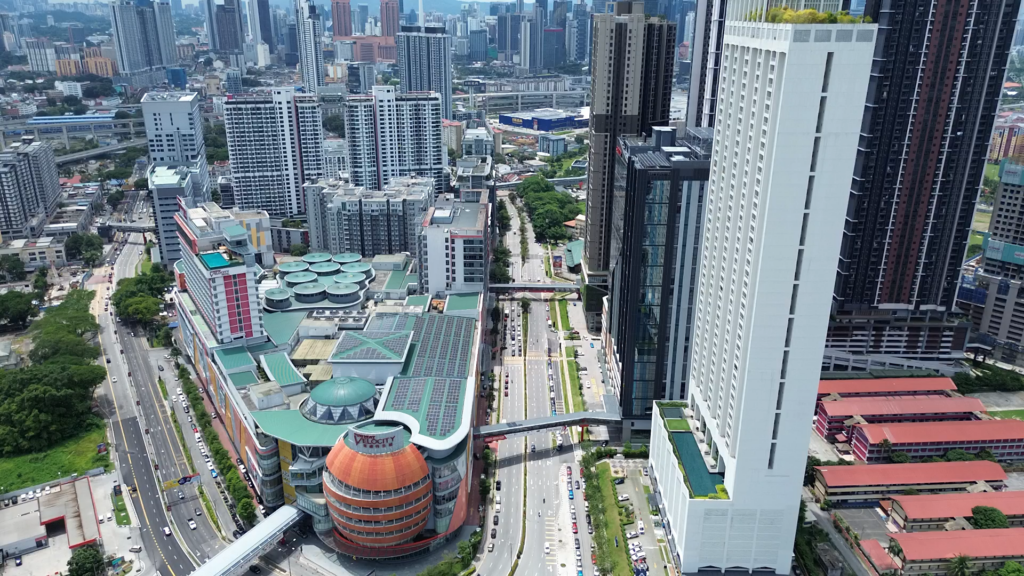
Located just 1 to 2 MRT stations away from the Tun Razak Exchange (TRX) financial district, Sunway Velocity is a stellar example of a “Vertical Township.” It integrates shopping malls, offices, medical centers, a university, and connects seamlessly to two MRT stations (Cochrane & Maluri).
Thanks to the spillover effect from TRX, the rental demand and yield here are incredibly robust. For career-minded professionals and smart investors, these mixed-use vertical projects represent the future.
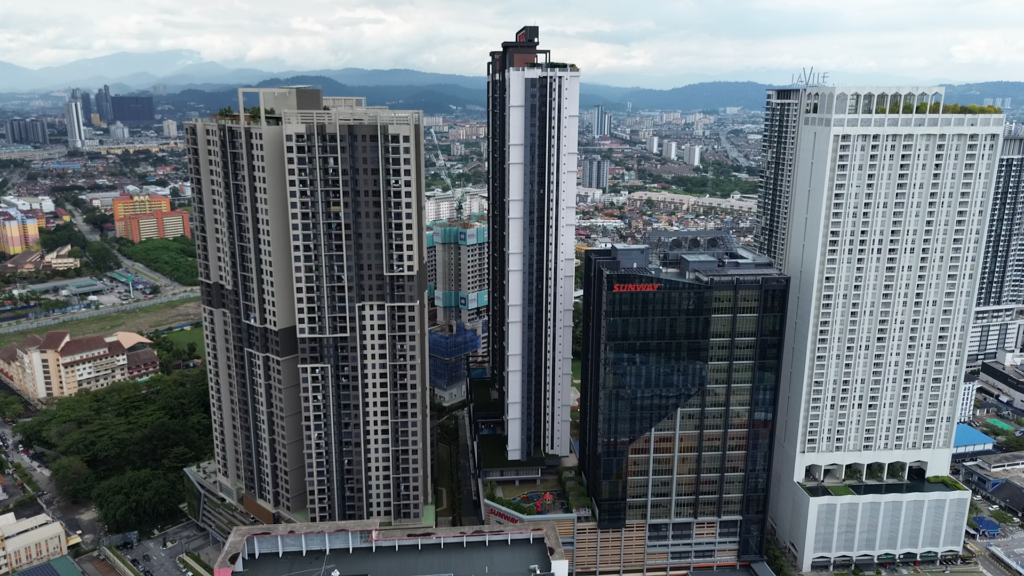
Part 5: Looking for Scale? Rare Township Opportunities in Core Locations
If you still love the grand scale of a master-planned township but want to stay close to the city center, your options are rare and highly sought-after. Keep your eyes on these premium master developments:
- Setia Federal Hill (Bangsar): A spectacular mixed-use township offering residential, commercial, and retail components right in the prestigious heart of Bangsar. This is truly the “last crown jewel” of Kuala Lumpur.
- Kwasa Damansara: A massive, government-backed master plan strategically positioned in the northern Klang Valley, integrating heavy transit infrastructure with low-carbon community planning.
- Central Park Damansara by Exsim (PJ Damansara Perdana): A master-planned community combining natural parklands with modern high-rises.
- W City OUG by WCT: Setting a brand new standard and lifestyle order within a mature, old-school neighborhood.
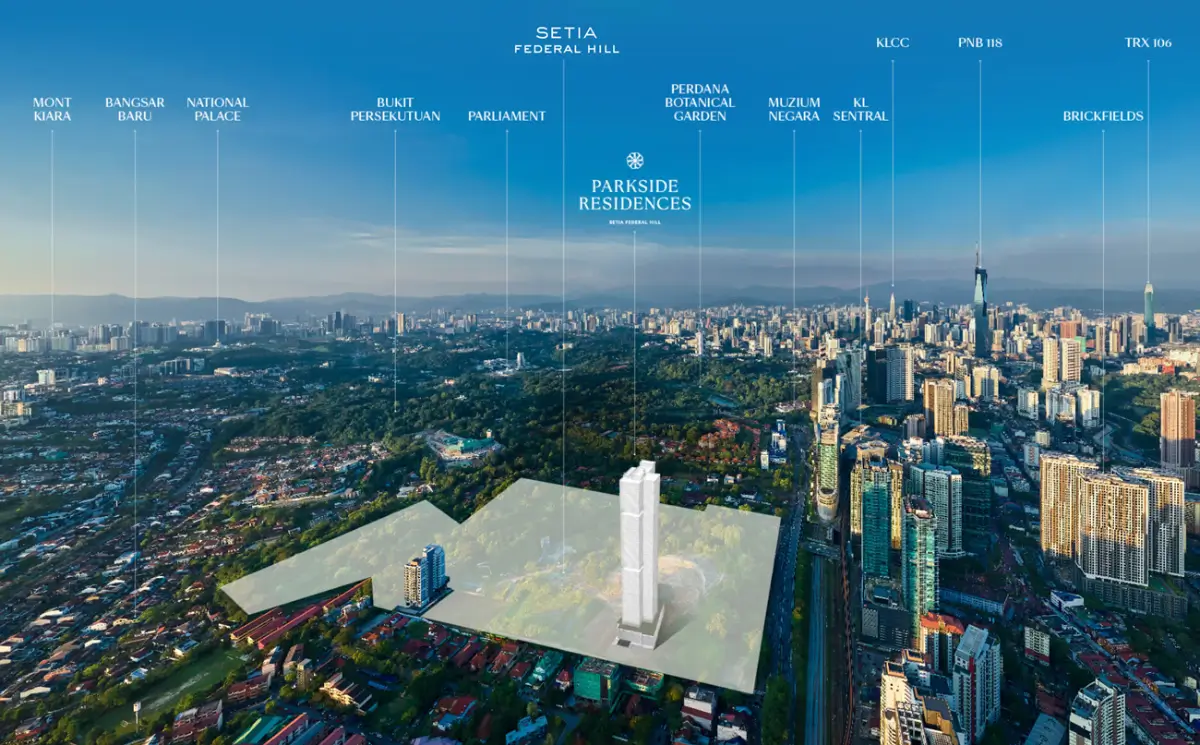
Interested in Parkside Residence? Get in touch with me directly via WhatsApp!
Chat with Vincent on WhatsAppVincent’s Tip: When investing in a township, always look at the developer’s track record. “Township experts” like SP Setia or WCT have proven experience in building resilient communities that hold their value exceptionally well even during market downturns.

Interested in Aras Residence? Get in touch with me directly via WhatsApp!
Chat with Vincent on WhatsAppPart 6: Vincent’s Golden Blueprint – How to Choose Based on Your Goals
To wrap things up, let’s look at your exit strategy and long-term goals.
1. If You Are Buying to Live (Own-Stay)
My philosophy is simple: Budget -> Location -> Layout. Never buy a cheap, far-flung landed home if it forces you to spend 1 to 2 hours stuck in traffic every single day. Your time is your most expensive asset. Understand where your daily life happens—workplace, children’s school, family hubs—and search within that radius.
2. If You Are Buying to Invest
Mature area pocket lands (Infill projects) are highly secure because their environment is already established.
However, if you choose to invest in a Township, you must look for uniqueness. What is its unfair competitive advantage?
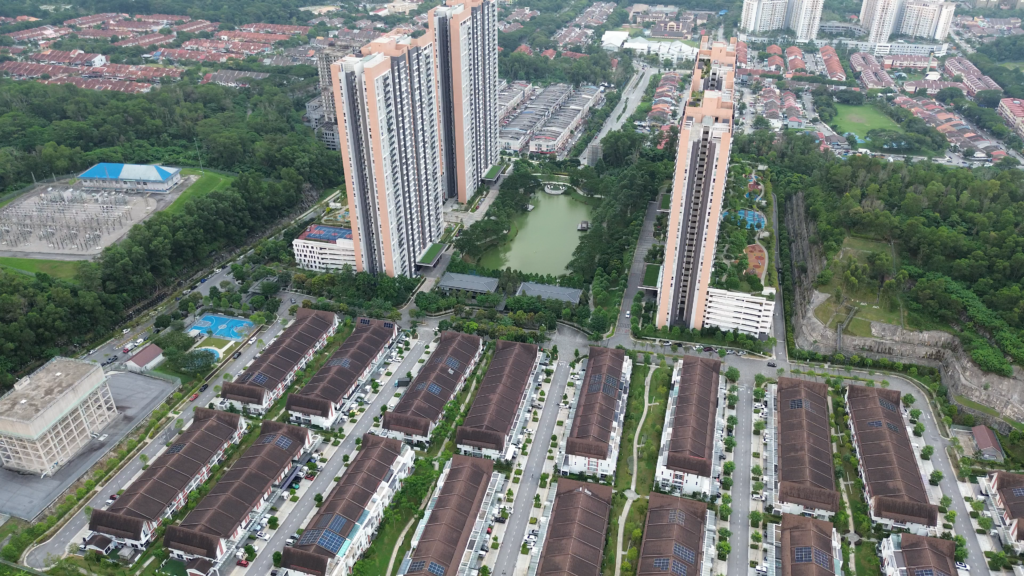
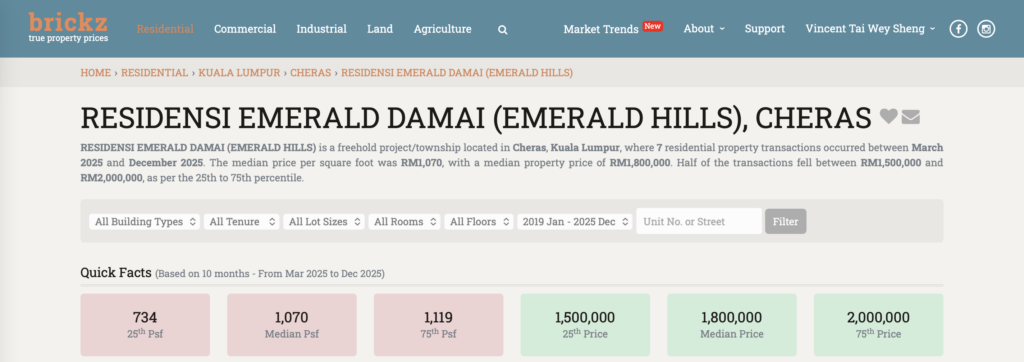
- Case Study: Emerald Hill (Alam Damai, Cheras) Emerald Hill is a highly successful horizontal township developed in an area already saturated with older landed houses. Yet, it succeeded tremendously. Why? Because it offered something the older neighborhood completely lacked: a private residents-only clubhouse and a central recreational park. This unique selling proposition (USP) made it stand out immediately. Since handing over keys, its secondary market transaction volume has been incredibly healthy, and capital appreciation has been highly impressive. Uniqueness is your safety net for asset growth.
A Quick Myth-Buster: Don’t Fear Commercial Titles!
Many buyers are irrationally afraid of “Commercial Under HDA” titles. Remember, your electricity tariff can be easily converted to residential rates, and the difference in quit rent and assessment taxes is relatively minor in the grand scheme of things.
What you should actually worry about is Property Management (governed by the Strata Management Act 2013). Even the most premium property in the best location will crash in value if the management team fails to maintain the common property.
What’s Your Property Style?
Are you Team Space (loving the massive scale of horizontal townships) or Team Efficiency (loving the vertical convenience of TODs and mature infill projects)? Let me know in the comments below!
If you are interested in any of the projects mentioned today—whether it’s The Queenswoodz, The Maxxon, W City OUG, Emerald Hill, or others—feel free to drop me a direct message. My team and I will get back to you with comprehensive project details, layouts, and pricing analyses to help you make your next smart move.
I’m Vincent Tai. Let’s look at Malaysian real estate from a professional angle. Don’t forget to subscribe to my channel and like my page. See you in the next article!